Author: George Simte | Digital Marketing Expert | Lamka, Manipur
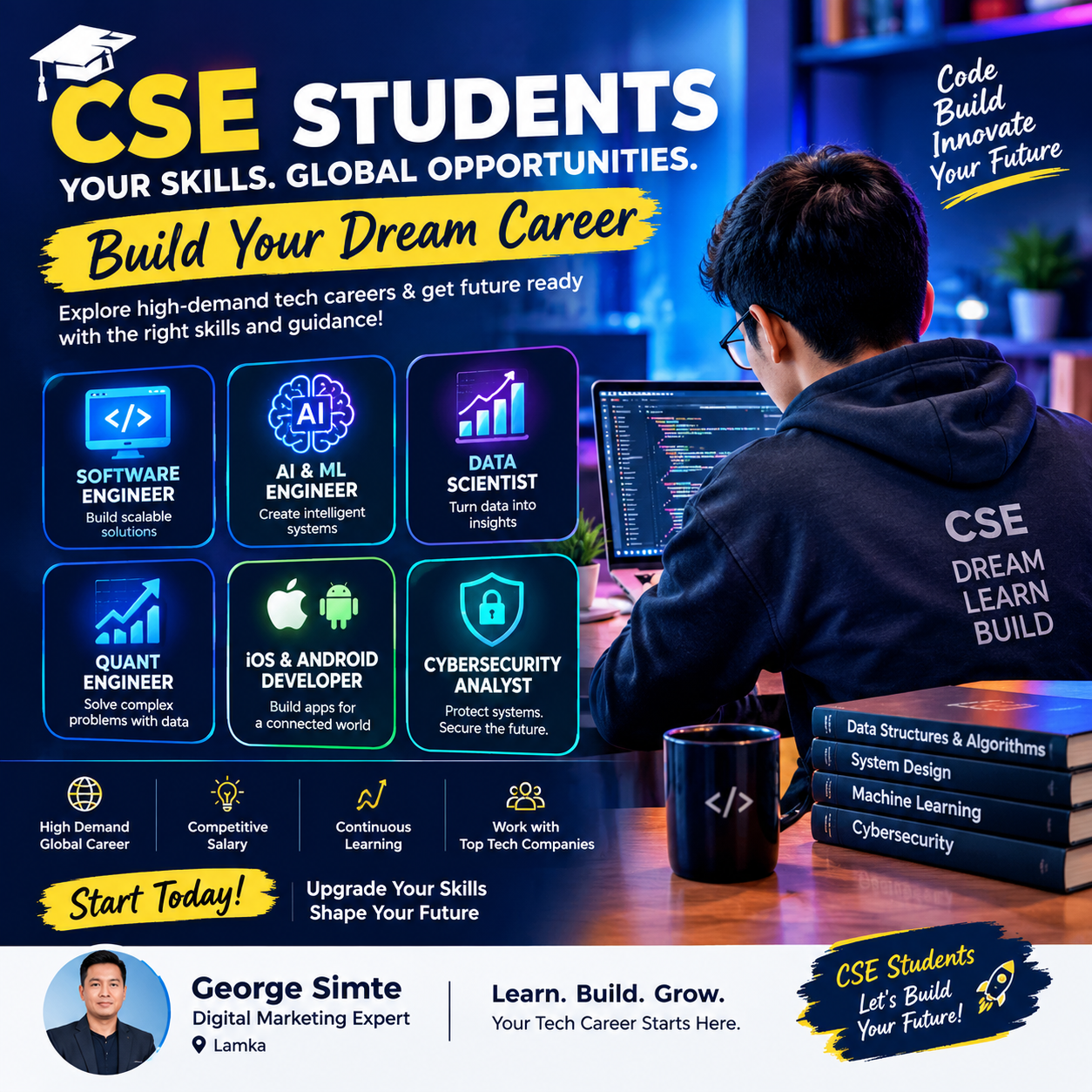
Computer Science Engineering (CSE) offers opportunities in software engineering, artificial intelligence (AI), machine learning (ML), data science, quantitative engineering, mobile application development and cybersecurity. However, the journey towards these careers can begin long before college.
For students in Classes 9–12, understanding JEE Main, JEE Advanced, eligibility requirements and engineering entrance preparation is an important first step towards building a successful technology career.
1. What Is JEE Main and Which Institutions Accept It?
JEE Main is a national-level entrance examination conducted by the National Testing Agency (NTA). Its B.E./B.Tech paper is used for admission to undergraduate engineering programmes at participating National Institutes of Technology (NITs), Indian Institutes of Information Technology (IIITs), and other Government Funded Technical Institutes (GFTIs).
JEE Main also serves as the qualifying examination for students seeking eligibility to appear for JEE Advanced, subject to the applicable rules.
Examples of institutions and categories include:
- NITs: NIT Tiruchirappalli, NIT Surathkal and NIT Rourkela.
- IIITs: IIIT Allahabad and other participating IIITs.
- Other institutions: IIEST Shibpur and participating GFTIs.
JEE Main also has separate papers for B.Arch. and B.Planning. Their admission pathways differ from the B.E./B.Tech paper.
2. What Is JEE Advanced and Which Institutions Accept It?
JEE Advanced is the entrance examination used for admission to undergraduate programmes at the Indian Institutes of Technology (IITs). Only candidates who meet its eligibility requirements can appear, including the requirement to qualify through JEE Main for Indian candidates under the standard route.
For 2026, JEE Advanced shortlists candidates from among the top 2,50,000 successful candidates in the JEE Main B.E./B.Tech paper, subject to the official category-wise rules and tie provisions.
Examples of IITs include IIT Bombay, IIT Delhi, IIT Madras, IIT Kanpur, IIT Kharagpur, IIT Guwahati and IIT Roorkee.
IISc Bengaluru also offers certain undergraduate programmes through specified admission routes; its B.Tech programmes for 2026–27 use JEE Advanced ranks through JoSAA.
Important: Qualifying an entrance examination does not guarantee admission. Final admission depends on rank, seat availability, category, programme preferences and the applicable eligibility rules.
3. JEE Main vs JEE Advanced: Comparison Table
| Feature | JEE Main | JEE Advanced |
|---|---|---|
| Conducting authority | National Testing Agency (NTA) | Organising IIT |
| Main purpose | Engineering admissions and qualifying for Advanced | IIT undergraduate admissions |
| Primary institutions | NITs, IIITs and participating GFTIs | IITs |
| Difficulty | Competitive; tests conceptual understanding and application | Highly competitive; demands deeper problem-solving |
| Main subjects for B.E./B.Tech | Physics, Chemistry, Mathematics | Physics, Chemistry, Mathematics |
| Can students appear directly? | Eligible candidates can apply under the current rules | Standard Indian route requires qualifying JEE Main and meeting all other criteria |
| Admission process | JoSAA and, where applicable, other counselling processes | JoSAA |
4. JEE Main Eligibility for Students Before Class 12
Students can begin preparing for JEE during Classes 9 and 10, but they generally become eligible to take the examination around their Class 12 examination or after passing it, subject to the official year-of-passing rules.
For JEE Main 2026, candidates should consult the NTA information bulletin for the permitted Class 12 passing or appearance years, subject requirements and other conditions. There is no general age limit for appearing in JEE Main, but admission rules and eligibility for particular institutions can differ.
For B.E./B.Tech admission, Physics and Mathematics are key qualifying subjects, alongside the prescribed third subject and other requirements.
Students should also distinguish between exam eligibility and admission eligibility. A candidate may be allowed to take JEE Main but still need to meet the Class 12 marks requirements of the institution they wish to join. JEE Main vs JEE Advanced
5. JEE Advanced Eligibility for 2026
Candidates following the standard Indian admission route must satisfy all applicable JEE Advanced conditions.
| Requirement | 2026 rule |
|---|---|
| JEE Main qualification | Be among the top 2,50,000 successful candidates in the B.E./B.Tech paper, subject to category-wise rules |
| Class 12 appearance | Generally, first appearance in 2025 or 2026 with Physics, Chemistry and Mathematics |
| Number of attempts | Maximum of two attempts in two consecutive years |
| Age limit | Born on or after 1 October 2001 |
| Age relaxation | Five years for SC, ST and PwD candidates under the 2026 rules |
| Previous IIT admission | Restrictions apply to candidates previously admitted to IIT programmes |
The official rules contain specific exceptions, including a provision relating to certain boards whose 2024 results were declared on or after 18 June 2024. Candidates should read the official eligibility page rather than relying only on a summary.
Class 12 marks required for IIT admission
For IIT admission in 2026, candidates must satisfy at least one of these conditions, with Physics, Chemistry and Mathematics as compulsory subjects:
- At least 75% aggregate marks in Class 12, reduced to 65% for SC, ST and PwD candidates; or
- Placement within the applicable category-wise top 20 percentile of successful candidates in their board examination.
The aggregate is calculated according to the official rules, including the prescribed five-subject framework.
6. Career Options After B.Tech Computer Science Engineering
Once students enter a CSE programme, they can explore several specializations.
| Specialization | Important skills | Potential job roles |
|---|---|---|
| Software Engineering | Python, Java, C++, algorithms, system design | Software Engineer, Backend Developer |
| AI and Machine Learning | Python, linear algebra, statistics, ML frameworks | AI Engineer, ML Engineer |
| Data Science | Statistics, SQL, Python, data visualization | Data Scientist, Data Analyst |
| Quant Engineering | C++, Python, probability, algorithms, numerical methods | Quant Developer, Quant Engineer |
| iOS Development | Swift, SwiftUI, Xcode | iOS Developer |
| Android Development | Kotlin, Android Studio | Android Developer |
| Cybersecurity | Networking, Linux, security fundamentals | Security Analyst, SOC Analyst |
| Cloud and DevOps | Cloud platforms, Docker, CI/CD, Linux | Cloud Engineer, DevOps Engineer |
| Web Development | HTML, CSS, JavaScript, React, databases | Full-Stack Developer |
Students should choose a specialization based on their interests, aptitude and willingness to build practical skills. Quant engineering, for example, typically demands particularly strong mathematics and programming, while cybersecurity requires a solid understanding of networks and operating systems.
7. How Students Can Start Preparing Before Class 12
Classes 9–10: Strengthen mathematics, science, logical reasoning and basic problem-solving. Explore introductory programming without neglecting school studies.
Class 11: Study Physics, Chemistry and Mathematics systematically. Build a timetable for concepts, practice questions and revision.
Class 12: Complete the prescribed syllabus, solve previous-year questions, take mock tests and prepare for board examinations alongside JEE.
After Class 12: Pursue engineering admission through the relevant examination and counselling process. During college, build projects, apply for internships and develop the technical skills required for your chosen career.
Conclusion
JEE Main and JEE Advanced provide different routes into India’s leading engineering institutions. JEE Main is the primary examination for NITs, IIITs and participating GFTIs, while JEE Advanced is the principal entrance examination for IIT undergraduate programmes.
For students aspiring to become software engineers, AI/ML engineers, data scientists, quant engineers or cybersecurity professionals, the best starting point is a strong foundation in mathematics, science and logical reasoning. Consistent preparation, practical projects and continued learning can help turn that ambition into a career. JEE Main vs JEE Advanced
About the author: George Simte is a digital marketing expert based in Lamka, Manipur, who shares educational and career-awareness content to help students explore technology and professional opportunities.
Best Career Options After CSE in 2026: Software Engineering, AI/ML, Data Science, Quant Engineering and More
Choosing the right career after Computer Science Engineering (CSE) can shape your professional future. Today, CSE graduates can explore opportunities in software engineering, artificial intelligence (AI), machine learning (ML), data science, quantitative engineering, mobile application development, cybersecurity, cloud computing and many other technology fields. Career in computer science
However, earning a degree alone may not be enough to stand out in a competitive job market. Students should develop practical skills, build projects, understand industry tools and gain internship experience to improve their job readiness.
In this guide, we compare the best career specializations after CSE, the skills required, typical responsibilities and the type of student best suited to each career.
1. Best Career Specializations After CSE
The following career paths offer different opportunities depending on your interests, mathematical ability, programming skills and long-term goals.
| Career specialization | Main focus | Essential skills | Typical job roles |
|---|---|---|---|
| Software Engineering | Building applications and systems | Java, Python, C++, DSA, system design | Software Engineer, Backend Developer |
| AI and Machine Learning | Intelligent systems and predictive models | Python, linear algebra, statistics, ML | AI Engineer, ML Engineer |
| Data Science | Extracting insights from data | Python, SQL, statistics, visualization | Data Scientist, Analytics Specialist |
| Quant Engineering | Financial systems and trading technology | C++, Python, algorithms, probability | Quant Developer, Quant Engineer |
| iOS Development | Applications for Apple devices | Swift, SwiftUI, Xcode | iOS Developer |
| Android Development | Applications for Android devices | Kotlin, Android Studio | Android Developer |
| Cybersecurity | Protecting systems and networks | Networking, Linux, security tools | Security Analyst, SOC Analyst |
| Cloud and DevOps | Infrastructure and deployment automation | AWS/Azure/GCP, Linux, Docker, CI/CD | Cloud Engineer, DevOps Engineer |
| Web Development | Websites and web applications | HTML, CSS, JavaScript, React, backend | Full-Stack Developer |
| Robotics and Embedded Systems | Hardware-connected intelligent systems | C/C++, electronics, control systems | Robotics Engineer, Embedded Developer |
No specialization is universally best. Your ideal choice depends on the type of problems you enjoy solving and the skills you are willing to develop.

2. Software Engineering vs AI/ML vs Data Science
These three careers are popular choices for CSE graduates, but their day-to-day responsibilities differ significantly.
| Comparison | Software Engineer | AI/ML Engineer | Data Scientist |
|---|---|---|---|
| Primary objective | Build reliable software | Build intelligent systems | Discover patterns and insights |
| Programming | Very high | Very high | High |
| Mathematics | Moderate to high | High | High |
| Core tools | Git, APIs, databases, frameworks | Python, PyTorch, TensorFlow | Python, SQL, statistics |
| Portfolio project | Full-stack application | Predictive model or AI application | End-to-end data analysis |
| Further study | Usually optional | Sometimes beneficial | Sometimes beneficial |
Which should you choose?
Choose software engineering if you enjoy coding, designing applications and solving programming problems. Consider AI/ML if you enjoy mathematics, algorithms and intelligent systems. Data science may suit you if you like statistics, analytical reasoning, experimentation and communicating insights from data.
According to the US Bureau of Labor Statistics, data science and information security are among the technology occupations with strong projected growth. These US projections are useful indicators, but they do not guarantee the same hiring trends or salaries in India. Source: BLS Occupational Outlook Handbook.
3. Is Quant Engineering a Good Career After CSE?
Quantitative engineering is a specialized career at the intersection of computer science, mathematics and financial markets. Quant engineers and quantitative developers build trading systems, pricing tools, simulation engines and high-performance financial software.
Students interested in this field should focus on:
- Advanced data structures and algorithms.
- C++ and Python programming.
- Probability, statistics and linear algebra.
- Numerical methods and optimization.
- Operating systems, performance engineering and distributed systems.
- Financial mathematics and market fundamentals.
| Career | Mathematics requirement | Programming requirement | Typical entry challenge |
|---|---|---|---|
| Software Engineer | Moderate | Very high | Coding interviews and projects |
| AI/ML Engineer | High | Very high | ML fundamentals and deployment |
| Data Scientist | High | High | Statistics and analytical problem-solving |
| Quant Engineer | Very high | Very high | Advanced algorithms and quantitative interviews |
| Cybersecurity Analyst | Moderate | Moderate to high | Networking and practical security skills |
Quant engineering can be rewarding for students who enjoy mathematics and demanding technical problems. However, opportunities are concentrated in particular financial centres and employers, and some quantitative research positions favour advanced degrees. A CSE degree alone does not guarantee entry into these roles.
4. iOS vs Android Development
Mobile development is another practical specialization for students interested in building products used by millions of people. JEE Main vs JEE Advanced
| Feature | iOS Developer | Android Developer |
|---|---|---|
| Primary language | Swift | Kotlin |
| Main development environment | Xcode | Android Studio |
| Target platform | iPhone, iPad and Apple platforms | Android devices |
| Important skills | SwiftUI, app architecture, APIs | Jetpack Compose, app architecture, APIs |
| Portfolio idea | Productivity or finance app | Shopping or education app |
Learn one platform thoroughly before attempting both. Build an application with user authentication, API integration, data storage, testing and a polished interface. Publishing or demonstrating a working app can help employers evaluate your practical ability.
5. Cybersecurity, Cloud Computing and DevOps
Cybersecurity professionals protect organizations from attacks, investigate suspicious activity and strengthen digital infrastructure. Cloud and DevOps engineers help organizations deploy, operate and scale applications reliably.
| Specialization | Learn first | Practical project |
|---|---|---|
| Cybersecurity | Networking, Linux, security fundamentals | Monitor logs in a legal practice lab |
| Cloud Engineering | Linux, networking, cloud fundamentals | Deploy a secure cloud application |
| DevOps Engineering | Git, scripting, containers, CI/CD | Automate application deployment |
| Web Development | JavaScript, frontend and backend | Build and deploy a full-stack website |
For cybersecurity, practise only in systems you own or have explicit permission to test. For cloud and DevOps, understand security, monitoring, reliability and cost management alongside the tools.
6. How to Become Job-Ready After CSE
Regardless of specialization, follow a structured learning plan.
Months 1–2: Build foundations. Strengthen programming, Git, problem-solving and the fundamentals relevant to your chosen career.
Months 3–4: Develop practical skills. Learn the required frameworks, libraries, platforms and development workflows. Practise regularly.
Months 5–6: Build a portfolio. Complete two or three meaningful projects, document your code, write clear READMEs and deploy projects where appropriate.
Alongside your learning: Practise technical interviews, improve communication, apply for internships and tailor your résumé to individual roles.
Your portfolio should demonstrate what you can actually build, not simply list courses you have completed. Employers may also assess collaboration, debugging, system design, security awareness and your ability to explain technical decisions.
Conclusion: Choose Your CSE Career Strategically
The best career after CSE is the one that matches your strengths, interests and professional ambitions. Software engineering offers a broad technical foundation; AI/ML and data science combine computing with mathematical analysis; quant engineering requires particularly strong quantitative skills; and mobile development, cybersecurity, cloud and DevOps offer other specialized pathways.
Start with one primary specialization, build strong fundamentals and complete real projects before collecting multiple certificates. Reassess your progress every few months using project quality, interview readiness and internship feedback.